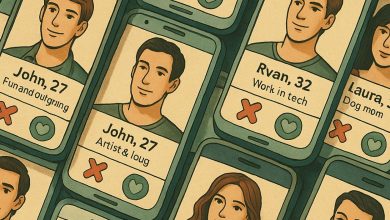
Match or eHarmony for a Serious Partner?


When it comes to online dating, the goal isn’t just to get more dates—it’s to get the right ones. For those seeking a long-term, meaningful connection in the United States, two names consistently rise to the top: Match.com and eHarmony. They’ve been in the digital matchmaking game longer than almost anyone, adapting from desktop websites to the slick apps we use today. With about three-in-ten U.S. adults having used a dating site or app, according to a Pew Research Center study, understanding the fundamental differences between these platforms is crucial for investing your time, money, and emotional energy wisely.
You will stay on this site.
Choosing between them isn’t about which one is “better” in a general sense, but which one is better aligned with your personality, dating style, and specific relationship goals. Are you someone who enjoys the thrill of the hunt and wants control over your search, or do you prefer a guided, curated experience designed to minimize guesswork? This is the core question that separates the Match.com experience from the eHarmony method. Let’s break down what each platform offers to help you decide where to begin your search for a lasting relationship.
The Core Philosophy: User Control vs. Scientific Guidance
The biggest distinction between Match.com and eHarmony lies in their foundational approach to connecting people. One puts you in the driver’s seat, while the other acts as your personal navigator.
Match.com: You Are the Search Engine
Match.com operates on a model of empowerment and choice. After setting up your profile, you are given full access to the platform’s database of singles. You can browse, use extensive search filters (like interests, education, lifestyle habits, and physical appearance), and decide who you want to contact. It’s a proactive approach that suits daters who have a clear idea of what they’re looking for and enjoy the process of discovery. With millions of users, Match Group (its parent company) holds a significant share of the dating market, as reported by Forbes Health, giving you one of the largest and most diverse dating pools available. This volume increases your chances of finding someone compatible, but it also means you are responsible for sifting through the options.
eHarmony: The Data-Driven Matchmaker
eHarmony takes a nearly opposite approach. Its entire system is built around its proprietary Compatibility Matching System. When you sign up, you’re required to complete a lengthy, in-depth personality and relationship questionnaire, which can take a solid 20-30 minutes. The platform uses your answers to create a personality profile based on key dimensions of compatibility. From there, eHarmony’s algorithm delivers a curated list of compatible matches to you each day. You cannot freely browse or search for users. This method is designed for individuals who may be overwhelmed by the “paradox of choice” on other sites and who trust a more scientific, guided process to find a deeply compatible partner. The platform claims its model is based on years of research into what makes relationships last.
Demographics and Intent: Who Uses These Platforms?
While both sites are geared toward serious relationships, their user bases have subtle but important differences. Understanding the typical user on each platform can help you gauge where you might fit in best.
The Typical Match.com User
Match.com attracts a broad and diverse demographic. Because of its long history and strong brand recognition, you’ll find singles across a wide spectrum of ages, professions, and backgrounds. While the majority are looking for a serious relationship, the definition of “serious” can be more flexible here. You might find people open to a long-term partnership that may or may not lead to marriage. It’s a slightly younger crowd on average than eHarmony, but it has a substantial user base in the 30+, 40+, and 50+ age brackets as well. It’s a mainstream choice for anyone re-entering the dating world after a divorce or looking to move past casual dating.
The Typical eHarmony User
eHarmony users tend to be very intentional. The high barrier to entry—that long questionnaire—naturally filters out those who aren’t serious about the process. The platform’s marketing heavily emphasizes finding love and marriage, which attracts a demographic that is often explicit about that goal. Demographics tend to skew slightly older, with a strong presence of professionals in their 30s to 50s who are financially stable and ready for a committed partnership. A University of Chicago study found that marriages originating from online connections had a slightly lower rate of breaking up and higher marital satisfaction than those that began offline, a finding that underpins the value proposition of sites like eHarmony.
Cost Comparison: Investing in Your Search
Neither Match.com nor eHarmony is free. While you can create a profile on both without payment, you’ll need a paid subscription to communicate effectively with other members. This paywall is an important feature, as it ensures that the people you’re interacting with are as invested in the process as you are.
As of early 2024, both platforms operate on a subscription model, with costs decreasing per month if you commit to a longer-term plan (e.g., 6 or 12 months). eHarmony’s pricing is generally at a higher premium, reflecting its specialized, curated service. Match.com often provides more pricing tiers and occasional promotions. For exact, current pricing, it’s always best to visit the sites directly, as rates and plans can change. Think of the subscription not as a cost, but as an investment in a more focused, efficient, and serious dating experience.

As relationship scientist Dr. Helen Fisher, a senior research fellow at The Kinsey Institute and Chief Science Advisor to Match.com, often notes, the brain is wired for romantic love. Online platforms simply provide a new, efficient venue for these ancient impulses to play out. The choice is whether you prefer a vast park to wander through or a guided tour of pre-selected monuments.
Final Verdict: Which Platform Is Right For You?
The “better” platform is entirely dependent on your personal dating style.
Choose Match.com if:
- You want to be in full control of your search and filtering options.
- You enjoy the process of browsing profiles and initiating conversations.
- You want the largest possible pool of singles to choose from.
- Your definition of “serious” is broad and you’re open to seeing where a connection goes.
Choose eHarmony if:
- You are busy and prefer a curated, less time-consuming daily experience.
- You trust a data-driven, psychological approach to matchmaking.
- You are specifically and explicitly seeking a long-term, committed partnership or marriage.
- You find endless browsing overwhelming and prefer a limited number of high-quality suggestions.
Ultimately, both services have helped millions of people find meaningful relationships. The key is to choose the one whose process aligns with your personality, giving you the best chance to connect authentically with someone who shares your ultimate goal.
Is eHarmony or Match better for people over 50?
Both platforms are excellent choices for daters over 50. Match.com has a larger overall user base, which may provide more options. However, eHarmony’s guided, serious-minded approach is often highly appealing to mature daters who know what they want and don’t want to waste time. Many find eHarmony’s focus on deep compatibility particularly well-suited for finding a partner in later life.
Can I use Match or eHarmony for free?
You can create a profile, view other members’ profiles, and receive matches for free on both platforms. However, to read and send messages—the core of online dating—you will need a paid subscription. The free version is best used as a preview to see if you like the interface and the quality of profiles in your area before committing.
Which platform has a better success rate for marriage?
eHarmony has historically built its brand around its success in creating marriages. While concrete, independently verified comparison data is hard to come by, eHarmony’s entire marketing and matching system is explicitly geared toward marriage. Users on the platform are generally there with that specific intention, which can increase the likelihood of that outcome.
Is the eHarmony personality test really accurate?
The questionnaire is based on psychological principles of compatibility, covering temperament, values, and communication styles. While “accuracy” is subjective, its primary function is to match you with people who have answered similarly on key metrics for long-term relationship success. Many users find that it leads to matches with whom they share core values, even if personalities differ.
How do the costs of Match and eHarmony compare in 2024?
Generally, eHarmony subscriptions are more expensive than Match.com’s. Both offer tiered pricing where the monthly cost decreases if you purchase a longer subscription (e.g., 6 or 12 months). Match sometimes offers more flexible, shorter-term plans. Always check the official websites for the most current pricing.
Which site is more LGBTQIA+ friendly?
Both platforms have adapted to be more inclusive. For years, Match.com has allowed users to search for same-sex relationships. eHarmony, which originally launched for heterosexual couples only, introduced same-sex matching in 2010. Today, both services allow you to register and seek partners of the same gender. However, some users feel that platforms with a broader user base like Match may offer a larger dating pool for LGBTQIA+ individuals.
Do I have to fill out the entire profile on these sites?
On Match.com, you can create a basic profile relatively quickly, though a more detailed profile will attract more attention. On eHarmony, completing the comprehensive Compatibility Quiz is mandatory to use the service. A complete and thoughtful profile on either platform is the single best way to show you are serious and to attract like-minded individuals.
In the end, whether you opt for Match’s expansive marketplace or eHarmony’s guided journey, the most important factor for success is your own engagement. A clear, honest profile and a proactive, yet patient, attitude are your best tools in the search for a lasting connection.
Terms and conditions may apply; please check the official rules on the platforms’ websites. This content is for educational purposes and does not substitute for professional advice.
Sources: https://www.pewresearch.org/internet/2020/02/06/the-virtues-and-downsides-of-online-dating/, https://www.forbes.com/health/dating/eharmony-vs-match/, https://www.statista.com/statistics/826778/most-popular-dating-apps-by-audience-size-usa/